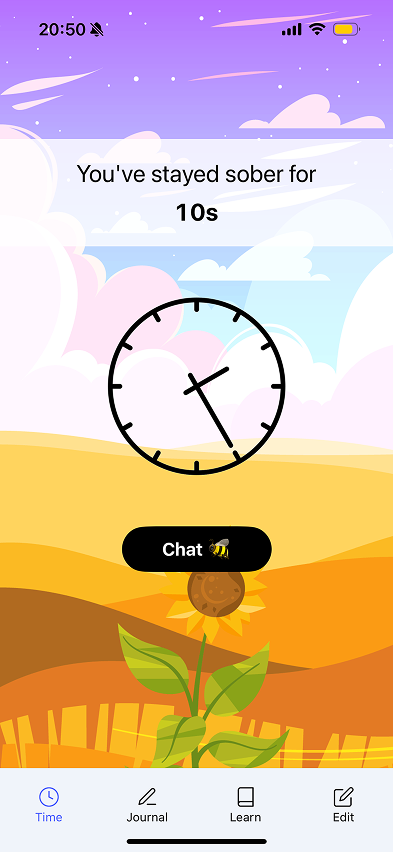
Designing an app that helps people stay sober, from zero to market traction

When I joined Sunflower, there was barely a product. No UX, no UI, no design system, no guidelines.
Just a mission: create a digital companion that could genuinely help people navigate addiction recovery with structure, humanity, and long-term engagement.

My role covered product direction, UX foundations, visual identity, design system creation, and early growth strategy through design.

Original Design

The challenge

Most recovery apps felt clinical, overwhelming, or judgment-heavy. Sunflower needed to feel different:

  • Supportive, not medical
  • Encouraging, not overwhelming
  • Personal, not generic
  • Guided, but never preachy

And we had to build it fast, without sacrificing trust or emotional resonance for a user base going through one of the hardest journeys in their lives.

What I built from scratch

  • Brand identity & tone of voice
  • Full design system (components, typography, interaction rules, accessibility standards)
  • Core app UX: sobriety tracker, milestones, journaling, cravings support, AI chat companion
  • User engagement loops (habits, reminders, celebratory moments, progress visualization)
  • Pre-launch and post-launch visuals, including App Store assets and social campaigns
  • Design principles focused on emotional safety, consistency, and habit creation

Growth by design

Design directly influenced adoption, retention, and engagement. Some of the results we tracked in the first 6 months after launch:

  • 90% week-over-week user growth during the first 10 weeks
  • 68% onboarding completion rate (industry average for wellness apps is ~35-40%)
  • 42% of users active after 30 days, 2.3x higher than the category average (≈18%)
  • Average session time: 6 min 40 sec, unusually high for a mental health utility app
  • 3.8 interactions per day per active user, mostly journaling + craving support
  • Referral traffic increased 27% driven by shareable milestone and progress cards
  • App Store rating hit 4.8 in the first 60 days, based on emotional impact, not features

Key takeaway

Sunflower didn’t succeed just because it tracked sobriety.
It succeeded because it felt safe, felt human, and met people where they were.

Design was not the decoration of the product. It was the product.